News
Weight-loss, diabetes drugs like Ozempic under review for side-effect reports
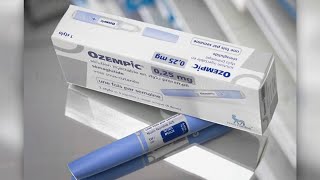
A short news item from 2024: the FDA is looking into reports of hair loss and suicidal thoughts in people taking Ozempic, Wegovy and Mounjaro.
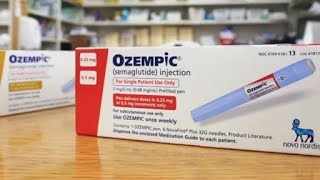
Ozempic · Wegovy · Rybelsus
A medicine that mimics GLP-1, a gut hormone that lowers appetite. Approved in the EU and US for type 2 diabetes and obesity. Approval covers only these medicines.
This site is for information and education only. It does not promote or encourage the use or purchase of the substances described and is not medical advice. Many are not authorised as medicines and their safety has not been established. We sell nothing and have no ties to sellers. For health decisions, consult a doctor.
Doping. Not banned. In 2026 WADA is collecting data on its use in sport.
Safety. Large studies and a US drug label. The label carries its strongest warning, on rare thyroid tumours in rodents, and lists sudden inflammation of the pancreas. This describes the pharmacy medicine. Sources: US drug label, study 1.
Risk of fakes. In tests of products from online sellers, purity was 7.7% to 14.37% against the 99% on the label, and every sample held bacterial toxins. WHO warned about fake Ozempic in 2024. Sources: study 1, WHO.
| Where | Status | Checked | |
|---|---|---|---|
| PL | Prescription only | EU-wide approvals, including Ozempic, Wegovy and Rybelsus, cover Poland. The European medicines database (EMA) shows no separate Polish product (9 October 2026). Source | Not yet |
| EU | Prescription only | Approved across the EU as Ozempic and Wegovy. This covers that medicine only, not products sold outside pharmacies. Source | Not yet |
| US | Prescription only | Prescription medicine (Wegovy). Source | Not yet |
Scientific papers per year 2015–2025
These are search results. A count shows how much exists, not how good the studies are. 1 Nov 2026.
Effect in studies. Weight fell by 14.9% on average, and by 2.4% on placebo, after 68 weeks. Two more large studies agree. The maker paid for the studies, which tested the pharmacy medicine.
What doctors, patients and companies reported to the US medicines agency (FDA), and single cases described in medical journals. A report says what happened to someone after taking the substance. It does not prove the substance caused it, and it does not say how often it happens. Reports do not change any grade.
| Most often reported | Reports |
|---|---|
| Nausea | 15,637 |
| Vomiting | 10,423 |
| Diarrhoea | 8,811 |
| Constipation | 6,484 |
| Less appetite | 6,109 |
| Weight loss | 5,525 |
| Tiredness | 4,809 |
| Slow stomach emptying | 4,549 |
Serious means the person went to hospital, their life was in danger, they were left with lasting harm, or they died. One report can list several side effects. Most of these reports come from medical treatment, often of people who are ill, not from use outside medicine.
FDA reports come from openFDA, cases from a PubMed search. The editors have not read these cases yet. Titles stay in the original language. As of 3 Nov 2026.
A short news item from 2024: the FDA is looking into reports of hair loss and suicidal thoughts in people taking Ozempic, Wegovy and Mounjaro.
A short report from 2023: a Banner Health doctor talks about the side effects of Ozempic and Wegovy that they see more often since people started taking them for weight loss.
A coach responds to the Nippard video. According to the chapters in the description, he covers GLP-1 medicines using a client as an example, then BPC-157 and TB-500, the risk of products without quality control, and why to be sceptical of the claims.
The description has ads
A short video in which the author rates popular peptides on a scale from S to F. His ratings are an opinion on whether something is worth taking. Our grades from A to E only say how strong the studies are. The comparison below is based on the video description.
A bodybuilder with a biochemistry degree goes through peptides for weight loss, injury healing and longevity: what works, what the risks are and where studies are missing. The description lists his sources, mostly large studies of semaglutide and tirzepatide.
The description has ads
| Studies | Kind of study | Who was studied | People | Duration | Dose as studied | Who paid |
|---|---|---|---|---|---|---|
| Once-Weekly Semaglutide in Adults with Overweight or Obesity. | Random groups | Adults with overweight or obesity, without diabetes | 1961 | 68 wk | 2.4 mg weekly | Manufacturer |
| Effect of Subcutaneous Semaglutide vs Placebo as an Adjunct to Intensive Behavioral Therapy on Body Weight in Adults With Overweight or Obesity: The STEP 3 Randomized Clinical Trial. | Random groups | Adults with overweight or obesity, with intensive behavioural therapy | 611 | 68 wk | 2.4 mg weekly | Manufacturer |
| Semaglutide 2·4 mg once a week in adults with overweight or obesity, and type 2 diabetes (STEP 2): a randomised, double-blind, double-dummy, placebo-controlled, phase 3 trial. | Random groups | Adults with overweight or obesity and type 2 diabetes | – | 68 wk | 1.0 or 2.4 mg weekly | Manufacturer |
We found these papers automatically in PubMed. The editors have not read them yet, and they do not affect any grade. Titles stay in the original language.